
International WOMEN’S day.
The Weight We Carry: and Why It's Not in Your Head. A personal reflection on women's health, stress, and the communities we need.
If you have ever felt that your body responds to stress differently to the people around you, more intensely, more persistently, more physically, I want you to know something: you are not imagining it.
This International Women's Day, rather than offering a list of inspirational quotes or celebrating achievements in isolation, I want to sit with something more honest. Something many of us feel but rarely see spoken plainly. The very real, very biological, and very social pressures that shape the experience of being a woman in a body that is under-researched, under-supported, and all too often misunderstood.
This isn't a piece about victimhood. It's about recognition. Because before we can truly support one another, we have to be willing to name what's actually happening.
Stress AFFECTS us Differently Because of Biology
Cortisol is often called the "stress hormone," and we all produce it; we wouldn’t survive without it, but what happens when we produce too much?
Research consistently shows that women's bodies are more sensitive to cortisol's effects, and the relationship is more complex than is often appreciated. Women tend to have a more reactive hypothalamic-pituitary-adrenal (HPA) axis, which means stress signals can be amplified and prolonged in ways that aren't the same in men.
What does that mean in practice? It means chronic stress doesn't just feel worse; it can manifest physically more readily. Disrupted sleep, digestive issues, hormonal imbalances, and immune dysregulation. The body keeps score, and the score is written differently in a female physiology.
Worth knowing
Oestrogen interacts directly with cortisol pathways, which is one reason why stress responses can shift across the menstrual cycle, during perimenopause, and postpartum. This isn't a weakness. It is biology that medicine is only beginning to properly account for.
For so long, women who described feeling overwhelmed by stress, physically and not just emotionally, were told they were anxious, sensitive, or simply not coping well enough. The science, slowly catching up, is telling a different story. Your nervous system is wired to experience the world this way. And that deserves acknowledgement, not dismissal.
When the Body Turns on Itself: Autoimmunity and Women
Nearly 80% of people living with autoimmune conditions are women. That figure is not a footnote. It is a crisis hiding in plain sight.
Conditions like lupus, rheumatoid arthritis, Hashimoto's thyroiditis, multiple sclerosis, and fibromyalgia disproportionately affect women, often striking during the reproductive years, often going undiagnosed for years, and often being attributed to stress or anxiety before anyone thinks to look deeper.
The reasons are layered. Women's immune systems are generally more active and reactive, an evolutionary advantage in many ways, particularly during pregnancy. But that same heightened immune activity means the system can misfire. The very thing that makes female immunity robust can also make it more prone to turning against the body it's meant to protect.
What makes this harder is the diagnostic journey. On average, women with autoimmune conditions see multiple doctors over several years before receiving an accurate diagnosis. They are more likely to be told their symptoms are psychological. More likely to leave appointments with prescriptions for antidepressants than referrals to specialists.
If you are living with unexplained fatigue, pain, or a sense that something is "off" in your body, and you have been dismissed, your instincts are worth pursuing. You know your body. Keep advocating for yourself.
This isn't about fear. It's about being informed. Understanding that women face a higher biological predisposition to certain conditions means we can approach our own health and support each other with more compassion and less self-blame.
The Loneliness of Female Friendships Under Pressure
Here is something we don't talk about enough: women are increasingly isolated from one another, and it's not because we don't value connection. It's because our modern lives have changed. The structures that once held female communities together are so different from those of our ancestors.
Multigenerational households have largely given way to nuclear family units or people living entirely alone. Geographic mobility means many of us live far from the women who raised us. Birth rates have shifted, which means fewer siblings, fewer cousins, fewer of the informal support networks that once existed naturally around pregnancy, child-rearing, and ageing.
Add to this the particular pressures of modern life: longer working hours, the pressure of productivity, the social media highlight reel that makes it seem like everyone else has it together. Something quietly unravels. Women who once would have leaned on each other now sometimes find themselves in competition, comparison, or simply too exhausted to reach out.
Research on the "tend-and-befriend" stress response suggests women are wired to seek social connection under pressure. When that connection isn't available, the impact on wellbeing is significant and deeply underappreciated.
None of this is anyone's fault. It is, in many ways, a structural problem, one shaped by economics, urban planning, social policy, and cultural shifts that happened over decades. But naming it matters. Because when a woman feels she lacks support from other women, she might internalise that as personal failure. And it rarely is.
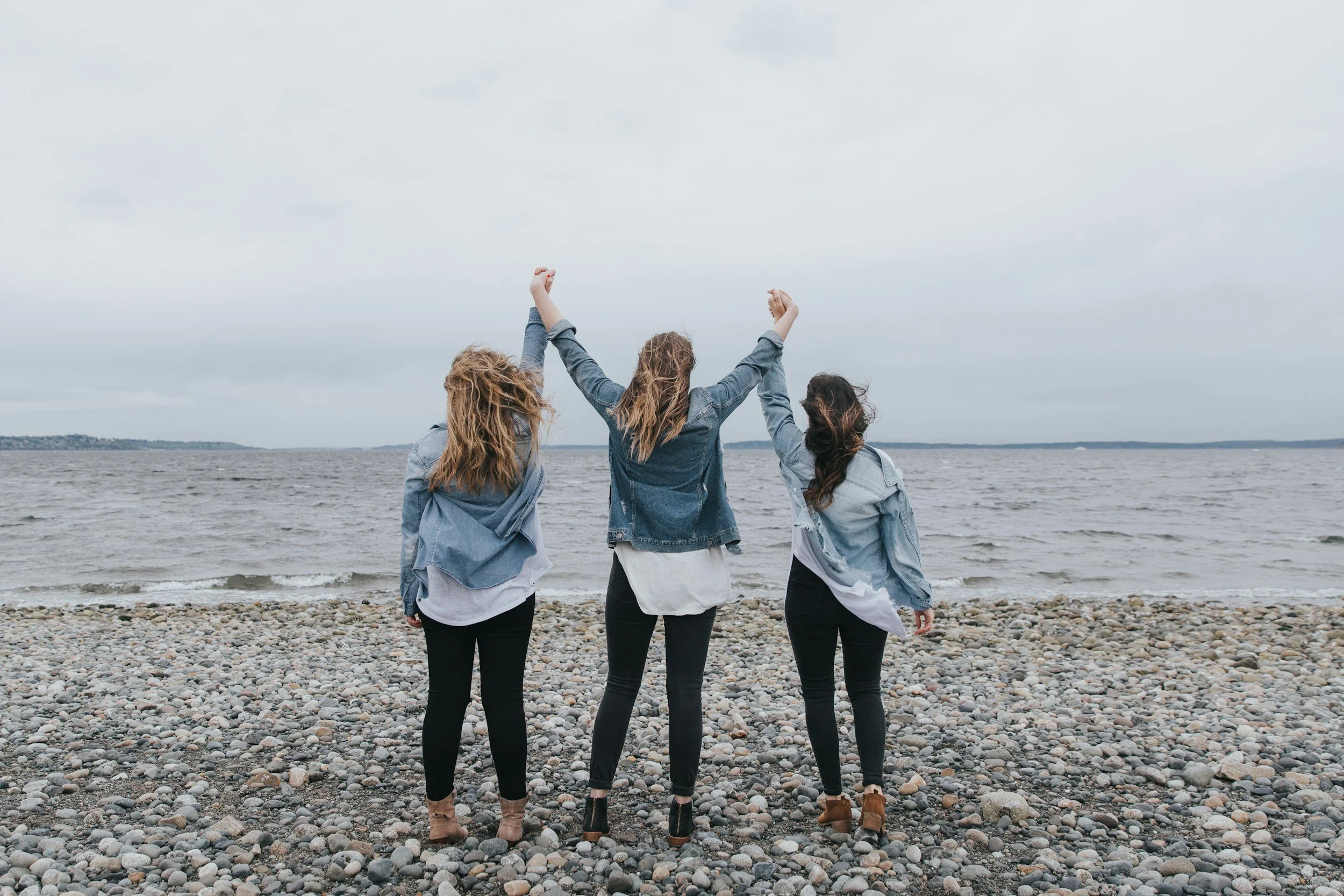
The impulse to connect, to be witnessed, to share the weight: these are not signs of dependency. They are signs of health. And rebuilding those networks, in whatever form they take today, is a deeply worthwhile act of care.
What This Day Asks of Us
International Women's Day is often framed around achievement and progress, and there is real cause for celebration. But it can also be a moment to turn inward with honesty and outward with tenderness.
To acknowledge that many women are carrying more than they should have to carry, biologically, medically, socially, and to ask: what would it look like to truly support them? Not with platitudes, but with presence. Real conversations, not with admiration from a distance, but with the quiet, consistent showing up that makes a difference to all the women we know.
You are not too sensitive. You are not too much. You are navigating a world that is still learning to understand you.
That is worth honouring today, and every day.