
Life after a heart attack or cardiac surgery: What nobody prepares you for.
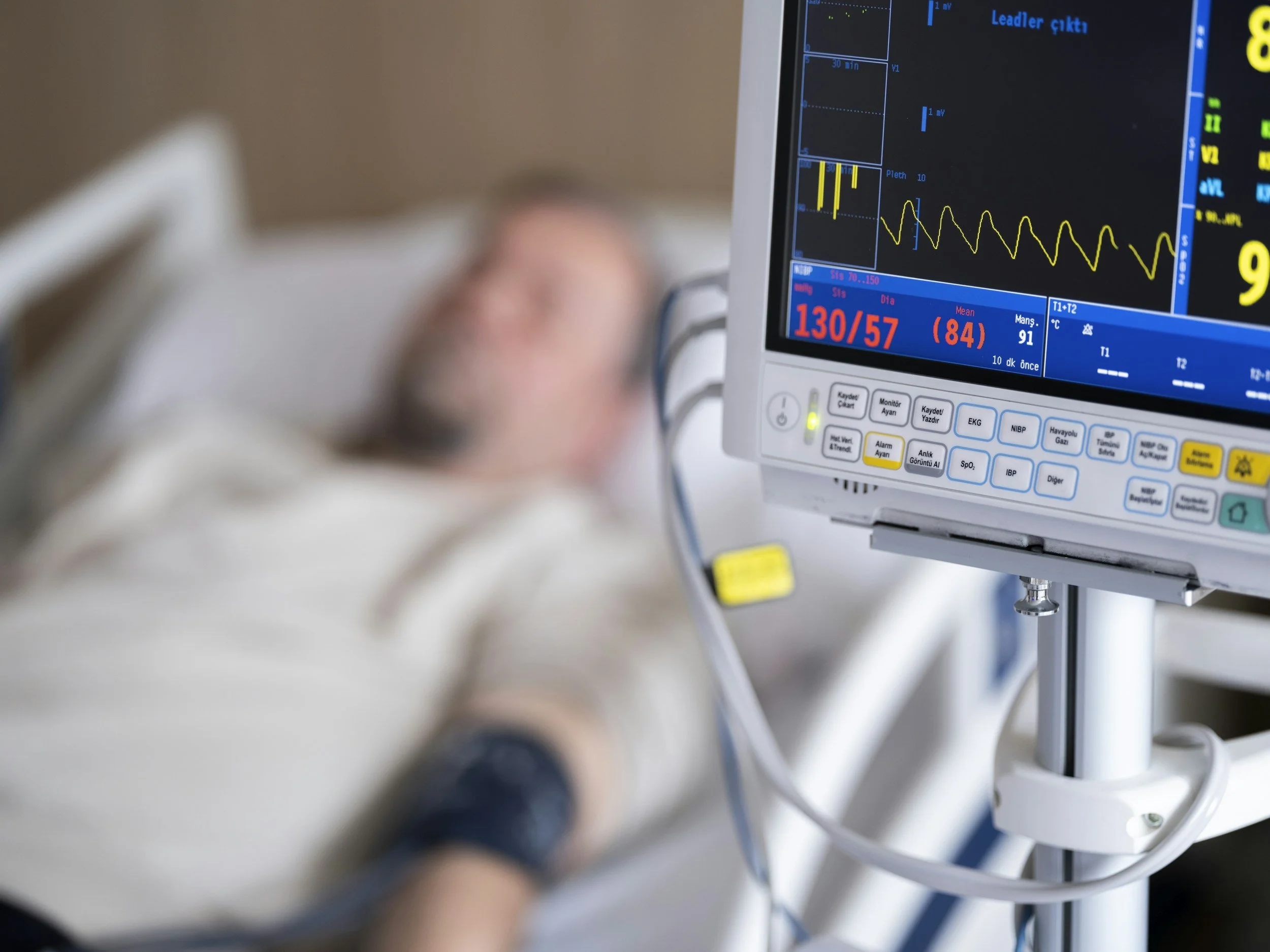
You survived. But survival is only the beginning. The weeks and months after a heart attack or cardiac surgery can feel as frightening, and in some ways more isolating, than the event itself.
You were discharged with a carrier bag of medications, a list of follow-up appointments, and perhaps a leaflet. Someone probably patted your hand and told you to "take it easy." And then you went home. And the reality hit you. Your body had nearly given out. Your life had changed in a moment, and yet the world outside your front door carried on entirely as normal.
If that description resonates, I want you to know: what you are feeling is not weakness, and it is not unusual. The emotional and psychological aftermath of a cardiac event is one of the most consistently underestimated aspects of heart disease, and yet it has a profound impact on long-term recovery. This article is for you, and for the people who love you and are not quite sure how to help.
Cardiac events are traumatic. This is something the medical community has been slow to acknowledge openly, but the evidence is robust. Studies suggest that between a quarter and a third of people who survive a heart attack go on to develop clinically significant anxiety or depression. Yet the majority of cardiac rehabilitation programmes offer very little in the way of psychological support.
The fear takes many forms. There is the fear of another event: the hypervigilance that makes every twinge in your chest, every moment of breathlessness, feel like the beginning of the end. There is the fear of exercise, even though movement is one of the most protective things you can do. There is the fear of being a burden, of slowing down, of never feeling like yourself again. And there is often a deep, disorienting sense of grief: for the person you were before, for the life you thought you had ahead of you, for the loss of a feeling of invincibility you may not even have known you possessed until it was gone.
The fear of another event is one of the greatest obstacles to recovery. Not because it is irrational, but because unaddressed, it can become as damaging as the disease itself.
This fear is not irrational. But it can become self-limiting in ways that slow recovery, impair sleep, elevate cortisol, and paradoxically increase cardiovascular risk. Naming the fear is the first step. The second is finding people who can hold space for it, rather than simply reassuring you it away.
The Gap in the System
Cardiac care in this country is excellent at saving lives in the acute phase. The paramedics, the catheter labs, and the intensive care teams are often nothing short of extraordinary. The challenge lies in what happens after the acute phase, in the weeks and months that follow, when the physiological crisis has been managed, but the human being living inside that body is still very much in crisis.
NHS cardiac rehabilitation, where it is available and accessible, is genuinely valuable. The structured exercise programmes have a meaningful evidence base and have been shown to reduce mortality. But provision is patchy, waiting lists are long, and uptake is disproportionately low among women, people from ethnic minority communities, and those living in more deprived areas. Many people complete a six-week programme and are then left, once again, without structured support.
Women, in particular, are significantly less likely than men to be referred to cardiac rehabilitation, less likely to attend if referred, and less likely to have their psychological symptoms recognised and addressed. Heart disease remains profoundly underdiagnosed and under-supported in women, and recovery reflects that same disparity.
Outside of formal rehabilitation, community support is often scant. Cardiac support groups exist and can be transformative. Peer connection, the simple act of being in a room with others who understand, is deeply healing. But they are not universally available, and not everyone finds group settings helpful. Many people are simply left to piece together their own recovery, guided primarily by the internet, which is an unreliable and often frightening companion.
Recovery: What to Expect
Understanding what is happening physiologically during recovery can, in itself, reduce anxiety. Knowledge is not a replacement for support, but it is a form of it.
The First Weeks
In the immediate aftermath of a heart attack, the myocardium (the heart muscle) is healing. Depending on the size and location of the affected area, this process takes weeks to months. You may feel profoundly fatigued. This is not laziness. Your body has undergone a significant physiological insult and is redirecting enormous resources towards repair. Rest during this period is not optional; it is medicine. I always think of it as if your heart has been in a fight, it is battered and bruised, and the swelling and injury need time to recover.
Post-cardiac surgery recovery carries its own specific timeline. Sternotomy (division of the breastbone) requires roughly six to eight weeks for the bone itself to heal. During this time, driving, lifting, and certain movements will be restricted. Pain at the wound site, and sometimes referred pain in the shoulders, is common and does not indicate a new problem. Sleep disturbance is almost universal in the early weeks, both because of physical discomfort and because the mind has a great deal to process. Just the six hours of anaesthesia need weeks, if not months, to get out of the system completely.
Months Two to Six
This is often when the emotional weight arrives fully. The immediate crisis has passed. The daily visits from concerned family members have tailed off. The dramatic nature of the event has faded in others' awareness, even as it remains vivid in yours. It is common to feel unexpectedly low, irritable, or emotionally flat during this period. Many people describe a sense of unreality, a disconnect between the life they are living and the one they feel they should be returning to.
Physically, energy typically returns gradually. Most people are able to return to gentle walking within the first few weeks, building incrementally. Sexual activity, which many people are afraid to ask about, can usually be resumed within four to six weeks of an uncomplicated heart attack, and sooner than many people assume after surgery. Your clinical team should be able to advise you specifically; please do ask, because the anxiety around this question can itself create unnecessary suffering.
The Longer View
Recovery from a cardiac event is not linear. There will be days that feel like enormous progress and days that feel like regression. This is normal, and it does not mean you are failing. A cardiac event is, in many senses, a renegotiation with your own body, and renegotiations take time.
Small Daily Strategies That Genuinely Change Outcomes
Medication matters enormously. Please take it. But medication alone is not the whole story. The research base for lifestyle modification in secondary prevention (preventing further cardiac events in people who have already had one) is compelling, and the changes that make the greatest difference are often more accessible than people realise.
Move Gently, Move Daily
Walking, even for ten minutes, is one of the most powerful medicines available to you. Exercise in secondary prevention reduces cardiovascular mortality significantly. Start small, be consistent, build gradually, and try to enjoy it rather than endure it.
Breathe with Intention
Slow, diaphragmatic breathing activates the parasympathetic nervous system and reduces cortisol. Even five minutes of intentional breathwork daily has measurable effects on heart rate variability, a key marker of cardiac resilience.
Eat for Your Heart
A Mediterranean-style dietary pattern, abundant in vegetables, fish, olive oil, legumes and wholegrains, is the most evidence-based dietary approach for cardiovascular health. This is not about perfection; it is about the cumulative effect of daily choices.
Protect Your Sleep
Poor sleep is an independent cardiovascular risk factor. After a cardiac event, establishing a consistent sleep routine, with regular bedtimes, a cool and dark room, and reduced screen use in the hour before bed, supports both emotional and physiological recovery.
Address the Emotional Layer
Ask your GP for a referral to a cardiac psychology service if one exists. If not, cognitive behavioural therapy has a good evidence base for cardiac anxiety. Some people find mindfulness-based approaches helpful; others find structured peer support more valuable. There is no single right path.
Remove What Harms
Smoking cessation after a cardiac event is one of the most impactful things you can do. The risk reduction begins within days. If you smoke and have not yet managed to stop, please ask for support; there is no shame in needing it, and the tools available now are considerably more effective than willpower alone.
None of these strategies requires expensive equipment or perfect conditions. What they require is a degree of structure, support, and self-compassion. That last ingredient is perhaps the most frequently overlooked.
For the People Around You
If you are reading this as a partner, a child, a sibling, or a close friend of someone recovering from a cardiac event, please know that your role matters enormously, and it is not a straightforward one. The people who love those who have had heart attacks often experience their own version of trauma: the visceral fear of loss, the hypervigilance, the sense of walking on eggshells. This is valid, and it deserves acknowledgement.
What helps most, consistently, is not elaborate intervention but presence and patience. Not treating the person as fragile. Not catastrophising every moment of fatigue or discomfort. Allowing them to do things for themselves when they can, and helping them without fanfare when they cannot. Asking what they need rather than assuming. And attending to your own wellbeing, because a carer who is depleted cannot sustain the long, quiet work of supporting someone through a major health transition.
Recovery is not a return to the person you were before. It is an invitation, however unwelcome, to become more intentional about the life you are building now.
The Wider Picture: Risk Factors and Midlife
For women in particular, and this is a population I think about a great deal in my clinical work, the midlife years represent a meaningful inflection point in cardiovascular risk. The loss of oestrogen's protective effects at menopause is associated with changes in lipid profiles, blood pressure, vascular function, and body fat distribution. Women who have had a cardiac event before, during, or after the menopausal transition deserve a holistic assessment of their risk, one that considers hormonal status alongside traditional cardiovascular risk factors.
This is not an area where standard cardiovascular care has historically been strong. If you feel that the connections between your hormonal health and your cardiac history have not been adequately explored, it is entirely reasonable to seek out a clinician who works at that intersection.
A Word on Hope
There is a version of recovery that is richer, in some ways, than the life that preceded the cardiac event. Not because the event was a gift (it rarely feels that way), but because it creates an undeniable clarity about what matters. Many people describe a shift in priorities, a renewed appreciation for relationships, a greater willingness to ask for help, and a quieter relationship with time. These are not consolations. They are real.
The medical evidence is also genuinely on your side. With optimal medication adherence, lifestyle modification, structured rehabilitation, and emotional support, the prognosis after a cardiac event is considerably better than the fear tells you it is. People go on to live long, full, meaningful lives after heart attacks and cardiac surgery. Many of them say, in hindsight, that they would not have had the life they ultimately built without the crisis that precipitated it.
That does not mean the path is easy. It means the path is worth walking.
This article is written for educational purposes and does not constitute individualised medical advice. If you have a specific health concern or are managing a chronic condition, please speak with your healthcare provider before making significant dietary changes or beginning a new exercise programme or before beginning any supplementation.