
Please, can we normalise weight gain in middle age?
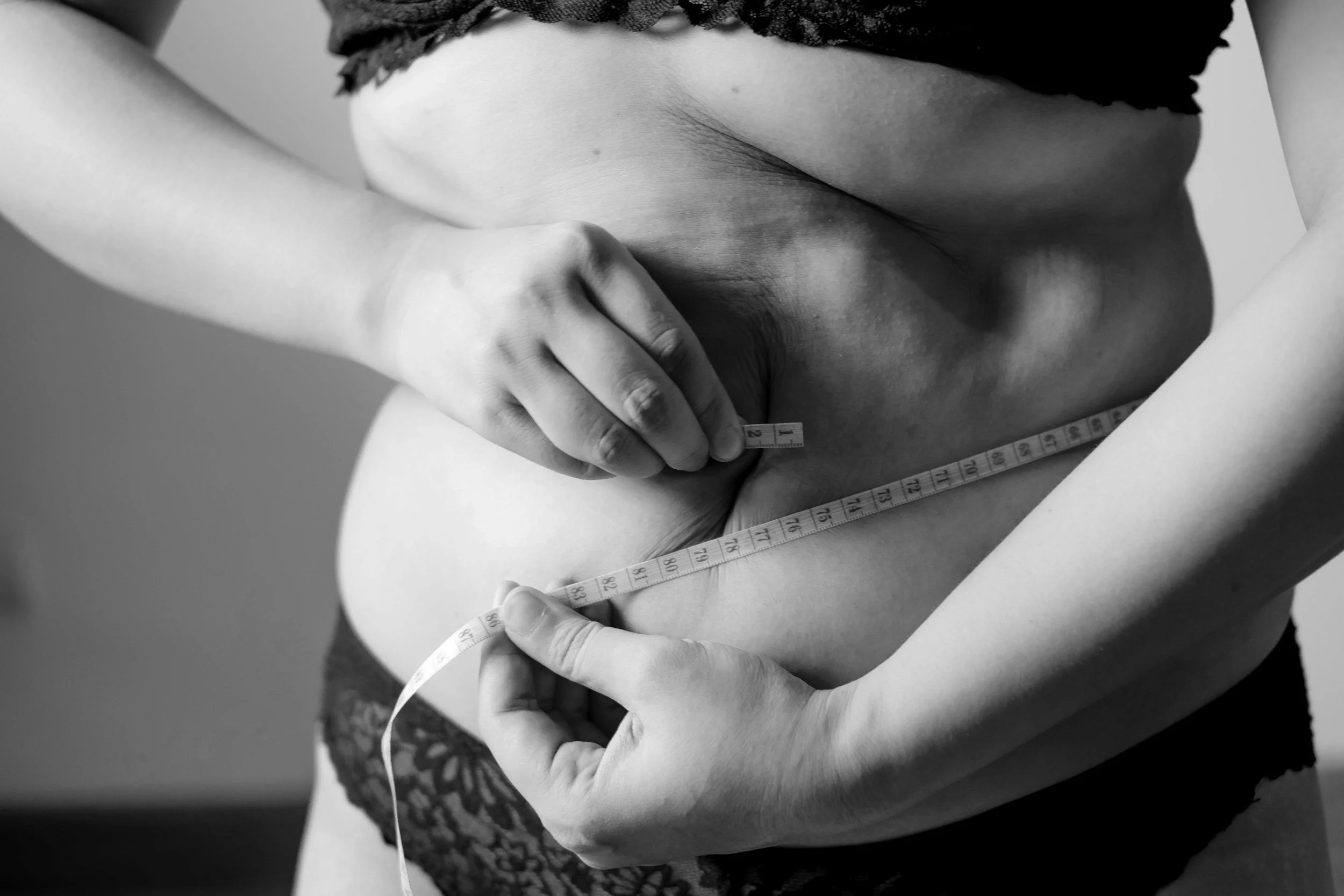
Accepting that weight gain is a normal part of hormonal ageing, let’s stop demonising our bodies.
I'm going to be honest with you today, because I think you need to hear this from someone who is supposed to “have it all together”. I am a stone heavier than I was a few years ago. I exercise regularly, I eat well, I prioritise sleep, I meditate, and I am always on the go. And yet, here I am beating myself up and feeling like a fraud as I am supposed to be a wellbeing coach. But actually, this is what menopause does to a female body, and no amount of discipline changes my fundamental biology. Yes, I could cut back on sugar, but what I need to do most is be a bit kinder to my nearly 50-year-old body, which has carried 3 babies and which I have abused (not proud but there you go).
I have found myself comparing my body to younger coaches, younger women, a version of myself that existed in a completely different hormonal time. Even today, there was an article about the DJ Sara Cox and her 6-pack. I found myself wishing I were slimmer, as that’s what society expects, right? The feeling of not being good enough reared its ugly head again. What I should have been doing is celebrating the fact that I can walk miles, lift heavy weights, and swim long distances. My body can do extraordinary things.
But here is what I really want to talk about.
I had a conversation recently that made me sad and angry at the same time. A woman, working incredibly hard to look after herself, told me she wanted to go swimming but won’t go until she feels happy in a swimming costume. What kind of world are we living in where a woman feels too ashamed to go swimming?
Middle-aged women are sitting out their own lives because of a standard that was never designed for us, never designed for this season of life, and frankly, was never fair to begin with.
So let's talk about what is actually happening in your body. Because understanding the science changes everything.
Oestrogen is not just a reproductive hormone. It plays a significant role in how your body distributes fat, how sensitive your cells are to insulin, and how efficiently your metabolism runs. When oestrogen begins to decline in perimenopause, fat that once sat on your hips and thighs, which is actually metabolically safer, begins to migrate. It settles around the abdomen instead. This is not cosmetic. This is your body responding to a fundamental shift in its hormonal environment.
As oestrogen falls, its protective buffering effect on cortisol, your primary stress hormone, diminishes. Cortisol promotes fat storage, particularly visceral fat, the fat that accumulates deep around your organs. So when life is demanding, which for most of us it consistently is, your body is now storing rather than burning in a way it simply did not before. The body you had at 35 responded differently to the same stress. That is not a willpower issue. That is biochemistry.
Oestrogen also helps keep your cells responsive to insulin. As levels drop, many women develop a degree of insulin resistance, meaning the body has to work harder to do the same job. Higher circulating insulin promotes fat storage and makes fat burning considerably harder. This is why foods that never affected your weight before can feel as though they land completely differently now.
Progesterone declines significantly, too. Among its many roles, it acts as a natural counterbalance to oestrogen and helps regulate fluid. Lower progesterone contributes to bloating and fluid retention, which frequently shows up on the scales and around the middle, and has nothing to do with how much you are eating.
Then there is leptin, the hormone that tells your brain you have had enough to eat. Research suggests that hormonal changes in menopause can disrupt leptin signalling, meaning your brain receives a less reliable message about fullness. This is why many women notice their appetite feels different. Not because they lack discipline, but because the hormonal conversation between their gut and their brain has genuinely changed.
And finally, from our mid-thirties onwards, we naturally begin to lose muscle mass. Oestrogen plays a role in maintaining muscle tissue, so as levels decline, this process accelerates. Since muscle burns calories even at rest, less muscle means a slower resting metabolic rate. Your body is burning fewer calories doing the same things it always did.
We are not the same as our grandmothers!
Compared to our mothers and grandmothers, many of us are working because most families now need two incomes simply to survive. Our working days are longer and start earlier. Lunch breaks feel like a luxury. Remote working and longer commutes mean we are moving far less than previous generations did, without even thinking about it. Our food contains fewer nutrients than it once did, and ultra-processed options are genuinely everywhere, cheap, convenient, and engineered to be irresistible by food companies that then want to sell us magic supplements that promise to cure all our woes.
We are navigating one of the most significant hormonal transitions of our lives, in one of the most demanding social and economic climates women have ever faced. The “sandwich generation” of elderly parents, kids, work, careers and relationships. And we are still showing up, thinking we need to be doing it all, mainly because of unrealistic societal expectations of younger is better.
Yet we are handed diet plans and exercise routines built for younger bodies, different hormonal profiles, and lifestyles with far more margin in them than ours. We punish ourselves for not achieving results that the science does not even support.
I want to be clear: looking after yourself absolutely matters. Nutrition, movement, sleep, stress management, these are the pillars of genuine wellbeing, and I will always advocate for them. But there is a profound difference between caring for your body and waging war on it.
You are not failing because you have a belly. You are not failing because the scales have not moved. The weight you are carrying is not a character flaw. It is the cumulative result of real, measurable, hormonal change in a body that is working extraordinarily hard to adapt in a modern lifestyle that is not designed for women.
Get your swimming costumes on, ladies, and thank your body for supporting you through a hormonal shit show that’s exacerbated by society.
If you are ready to stop fighting your body and start genuinely supporting it through this phase, I am here for you. This is exactly what I am here for.
This article is written for educational purposes and does not constitute individualised medical advice. If you have a specific health concern or are managing a chronic condition, please speak with your healthcare provider before making significant dietary changes, beginning a new exercise programme or beginning any supplementation.